
Week 01: The Beginning
The Experiment begins with Week 1. And what a week: BTC puked, then puked some more, allowing a big results for the very first issue of The Journal. Read now.

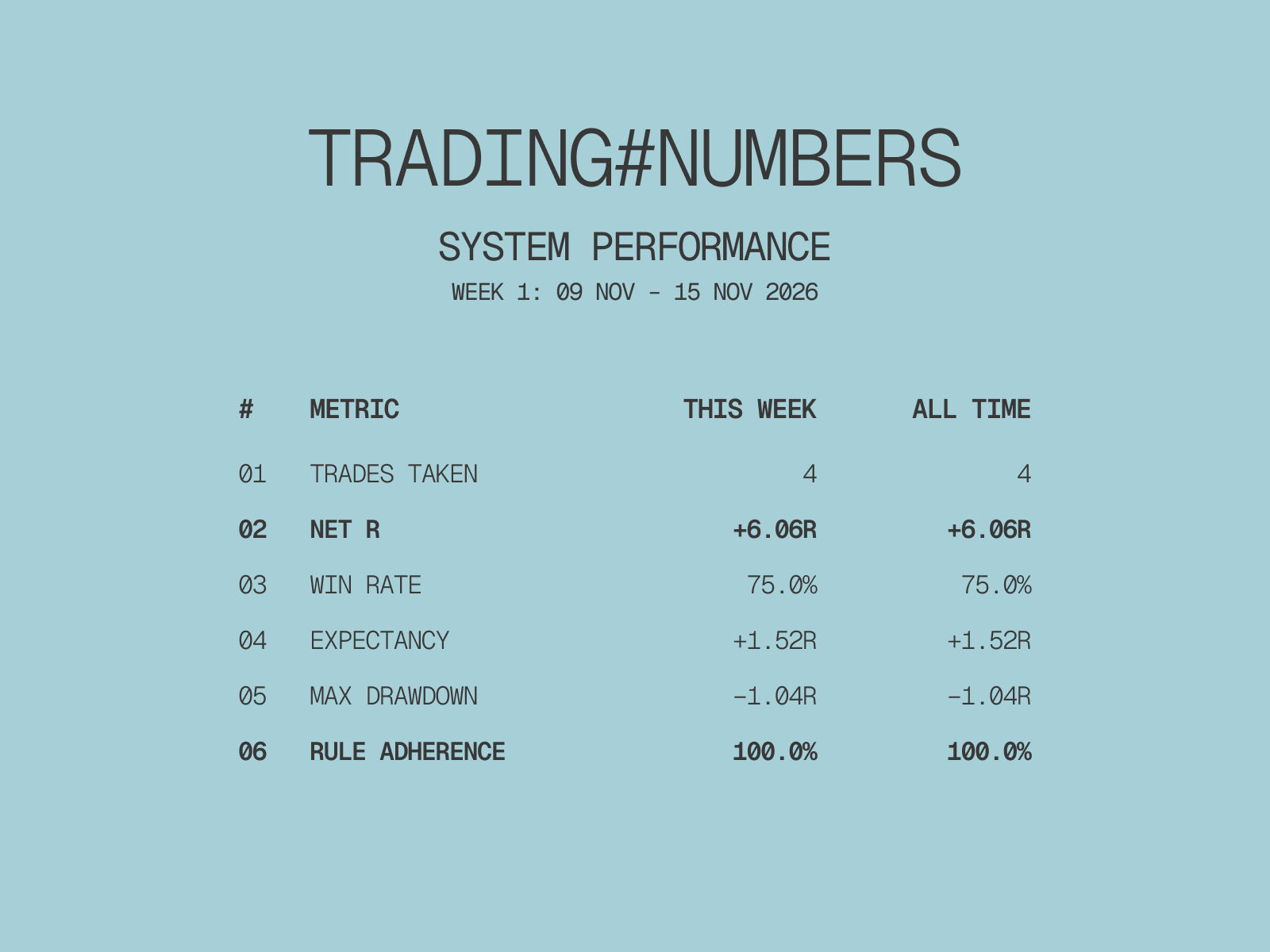
Week 1 is done, and what a week to start the TRADING#NUMBERS main account indeed. While BTC fell 20% and put the market into absolute bear mode, I for one, welcome the volatility that comes with these massive moves as it allowed my system the chance to actually take trades.
The Numbers
The Market
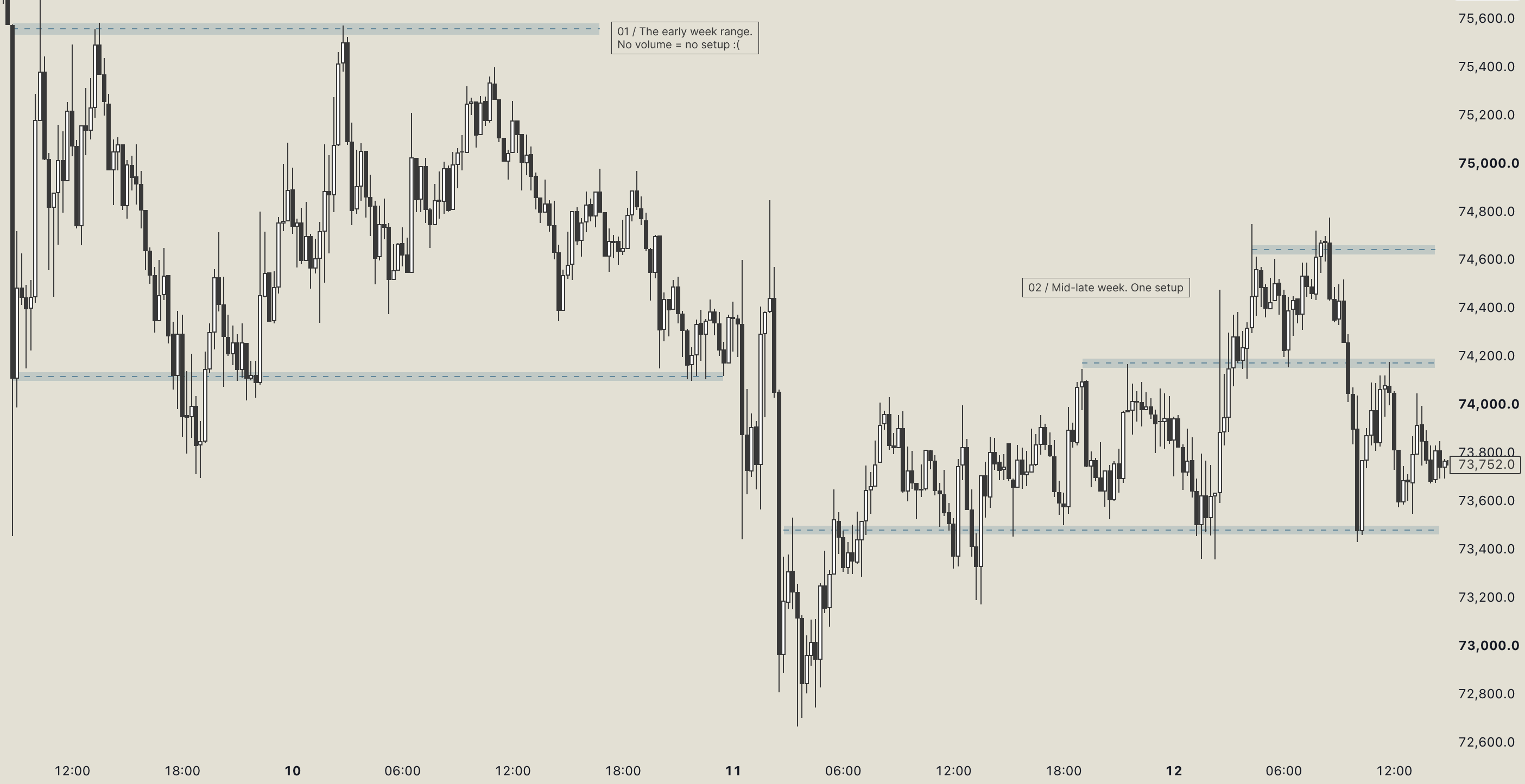
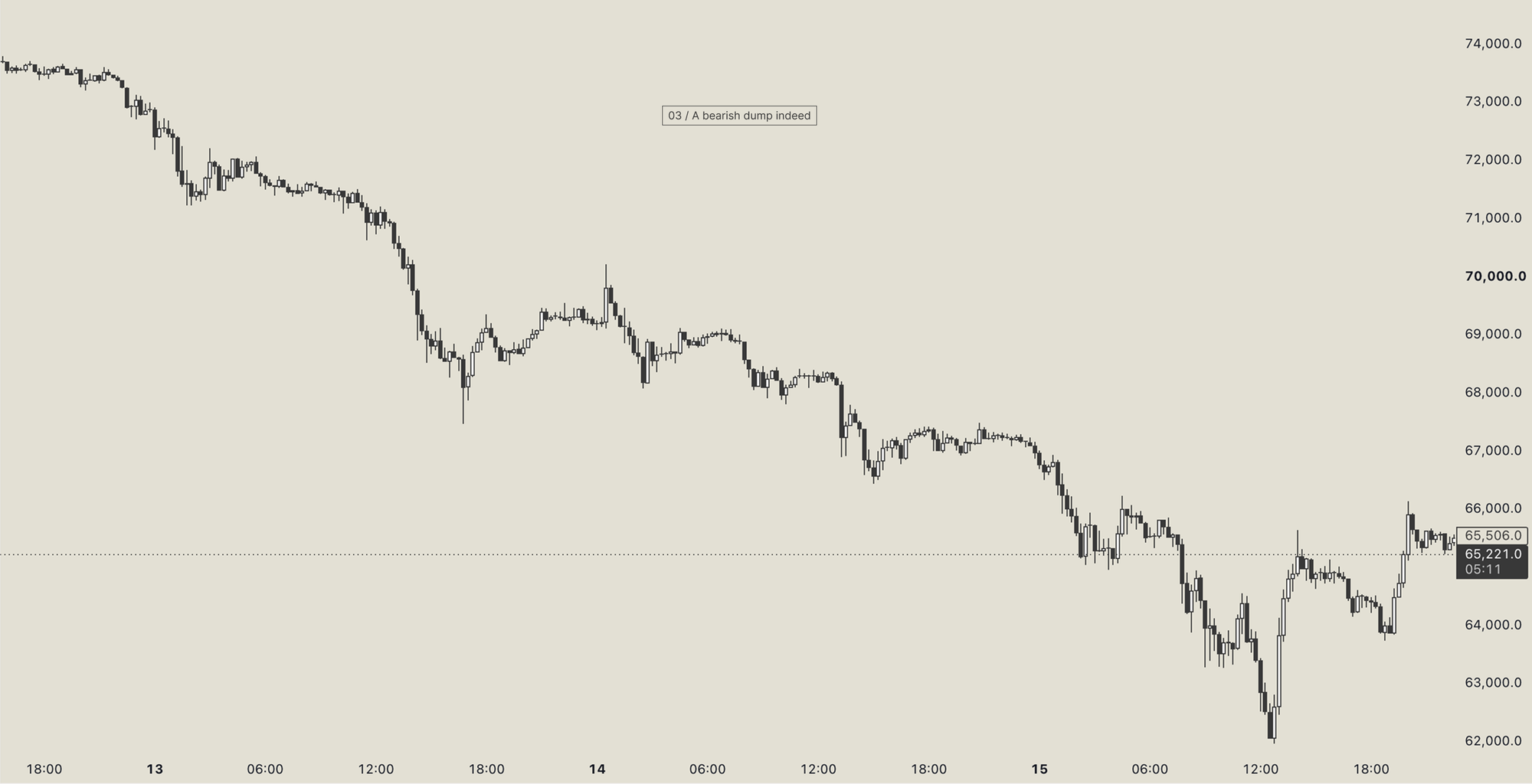
Figure 02 and Figure 03: BTC for the week
We kicked off the week with price bouncing around 73K to 75K. There were some decent looking ranges, but for the most part, the volume wasn’t present for me for valid setup to appear. While I stayed patient, I also resigned myself to thinking that week 1 of The Experiment might not have any trades to write about, which while not ideal, was fine.
How wrong I was. Towards the end of the week, the action picked up and BTC melted. I mean really melted. Like really, really.
And while I couldn’t anticipate or capture all the moves, I managed to take a few trades, learn a few things and I guess have something decent to share. All while wrapping up the first week positive. Great.
The Trade
While this was not the rocking +5R trade I booked, it was the first trade of The Experiment. As such, I feel it deserves a spot in this week’s summary. I will however do a write-up and analysis of the winning trade.
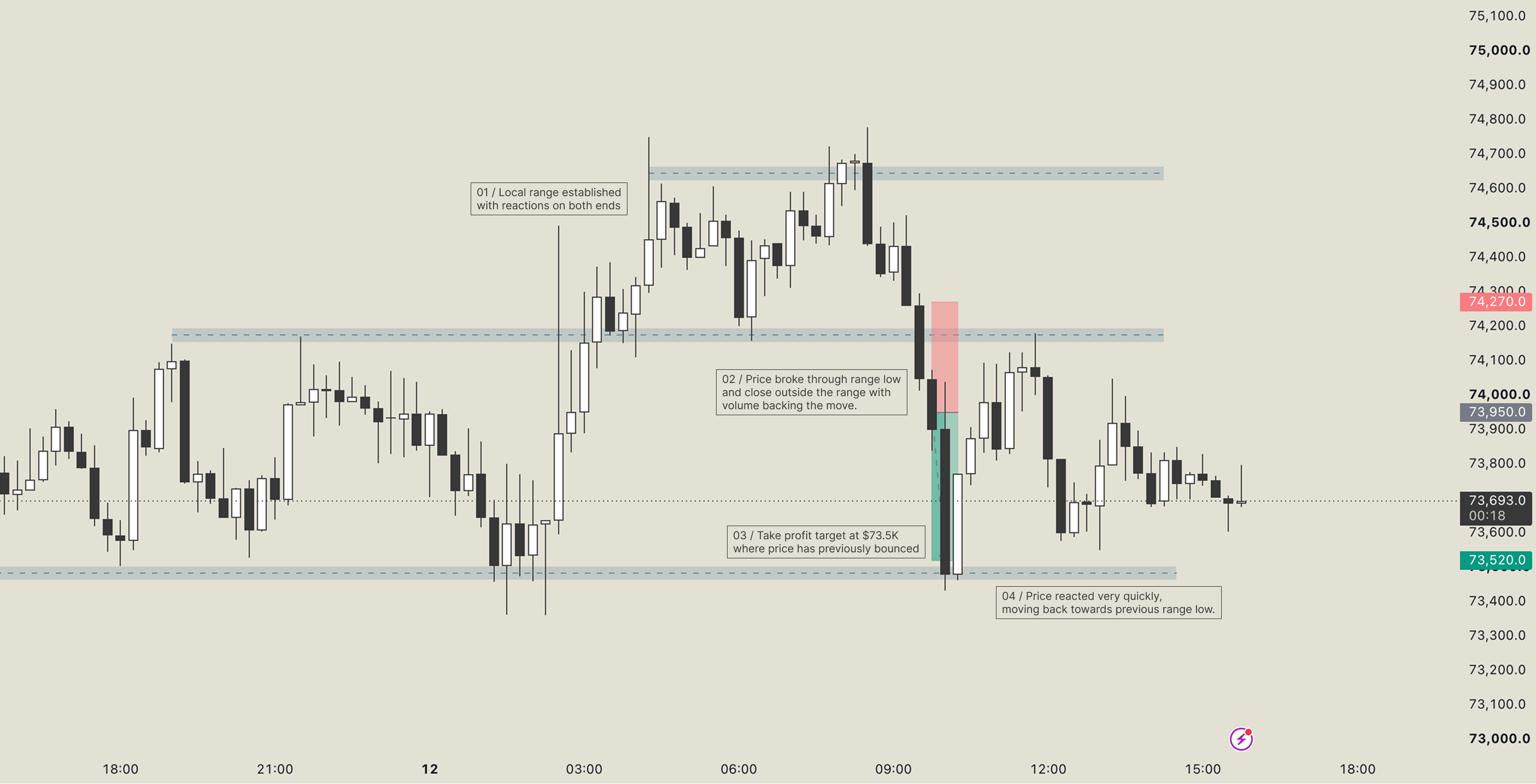
Price was ranging and bouncing around the $74.1K and $74.6K range locally. It was by means a huge range, but enough to work with.
Key levels were marked out and I saw price fall to range low with volume picking up significantly. In terms of going from setup to actual trade, the main goal is to observe what the impulse candle (I sometimes call this the ‘signal’ candle) does and more importantly where it closes.
The key word is close, because, as years of trading have taught me, a lot can happen in the last minutes of a candle. It could end up blasting to levels you never thought it could. Particularly with BTC…well, all crypto.
I’m patient and for this system, I never want to jump the gun and execute before the closing of the 15-minute candle (that’s not to say I won’t make this mistake ever, but I try not to).
Price closed outside range low, with volume and I saw we had really moved past where volume was. A bunch of positions had opened and closed, and I like to confirm by checking the levels where net longs and net shorts are.
In this case, they were nicely placed where I wanted them to be:
- Longs were offside and within the range
- Shorts were onside, outside the range
I say nicely placed, because apart from providing a good setup for this, they make for good stop loss placement and levels to monitor (more on this in another article).
I placed a sell order and wondered if I was going to get filled as breakouts can actually move very fast in a single direction. Well I got filled and after a very short amount of time had my trade close.
I think this trade was also a good example of targeting. It’s super important to know when you want to exit the trade for two reasons:
- Potential R calculation
- Where the trade could reverse
For this breakout trade, I simply targeted the next area where price reacted a few times and bounced off. And lucky so because price basically reversed on me shortly after hitting my take profit.
Fees: R Eater
After my first trade, while I was updating my journal, I noticed something that was off: my R was lower than expected.
According to my calculations, net R for the trade should have been +1.06R. But my journal recorded +0.91R. That’s a missing of +0.15R, which is by no means small.
In terms of the trade open and closing, they were all correct and as expected with maker orders being filled on both sides. Fees though were higher than expected and it turns out that my execution had an extra 0.04% “builder fee” on both sides of my fill.
Basically, while trading, I executed my tradings the Rabby wallet Hyperliquid interface which took the cut. And a big cut too.
Seriously, maker fees should be 0.0144% each side, but this pumped it to 0.0544%, which is legit higher than my taker fee at 0.0432%.
Couple of takeaways:
- The impact of fees is real (hence why I’m tracking results as net of fees)
- Just execute directly on Hyperliquid. This isn’t an issue as there are no crazy advanced orders or anything for now.
Glad that mystery was solved fast and right at the start of this experiment.
The Beginning
Market sentiment and raw performance aside, I’m glad to have properly started on the TRADING#NUMBERS Experiment.
It’s just week 1, and only managed to take trades on my main account, but as I get into the rhythm of things, there will be activity on the others when ready.
If you have already read about The System, well you can find out more The Setups
Feel free to add any comments or thoughts on this. But you’ll need to subscribe to do so. So do so.
Subscribe for more access to journal entries, system notes and more.
Member discussion