


The Setups
The System runs off two fairly basic and straightforward setups. Well, mostly that is...
The Experiments documents three rules-based crypto trading systems, how their performance will be tracked and how they will be improved. Be sure to read this article before diving into The Journal.
The key focus of TRADING#NUMBERS is exploring and documenting my crypto perpetual futures trading systems.
In my journey towards becoming a trader, I’ve made plenty of mistakes and went through the rollercoaster of emotions, profits, losses, liquidations, you name it.
Things started clicking for me when I realised the following:
After what felt (and still feels) like an eternity, I developed a BTC trading system based on volume and order flow on a 15-minute time frame and while I feel it has been working, I am at a stage where I want to quantify and confirm it.
TRADING#NUMBERS is currently testing three trading systems.
All three systems use mean reversion and breakout setups, however these are primarily differentiated based on volume thresholds and also pairs.
See The Setups for more information
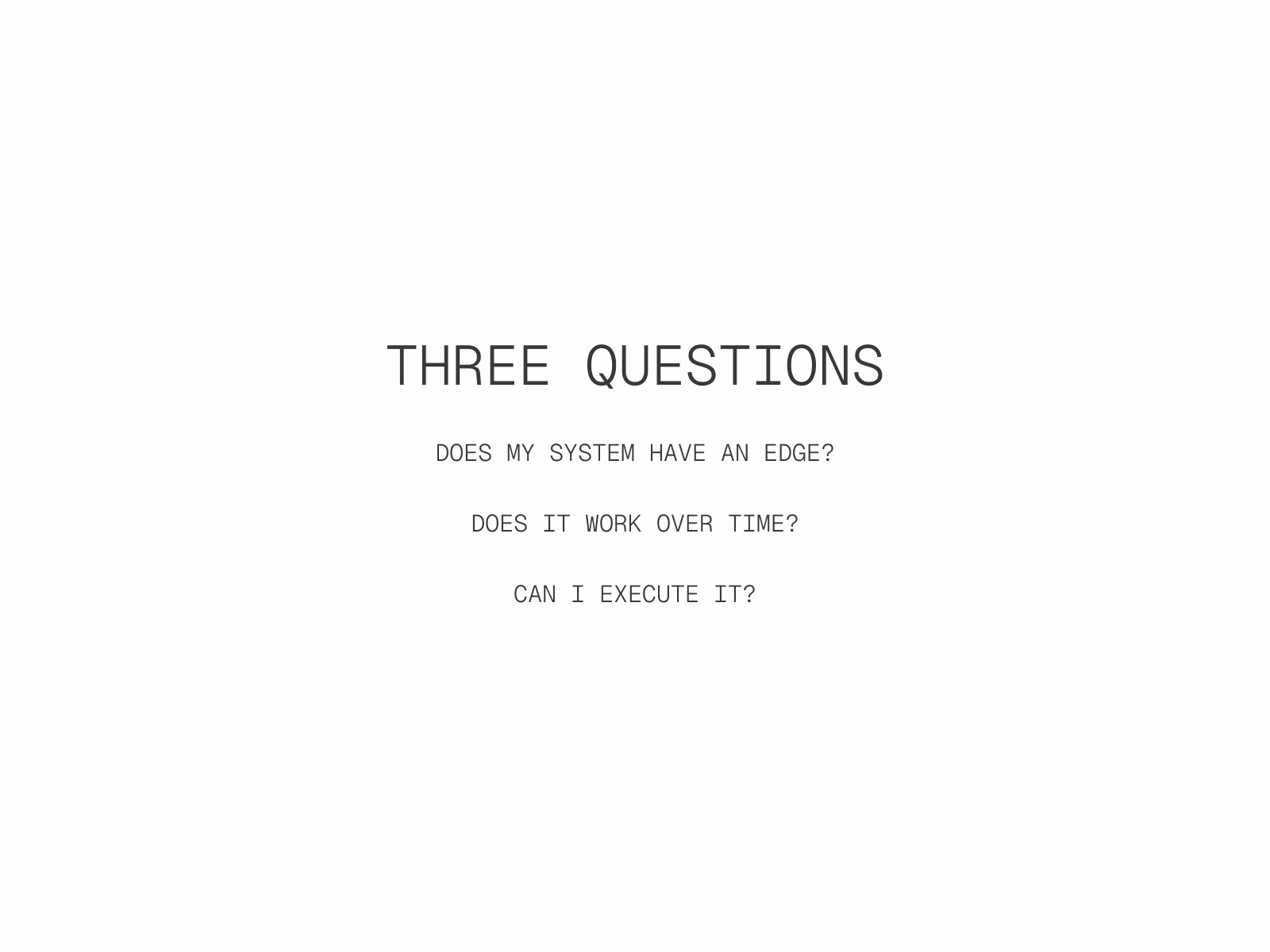
The aim of this experiment is to document the journey of my BTC performance with as much transparency and openness as possible to answer the following questions:
In my mind, the answer to all of these questions is yes (otherwise I would not be trying). The reality, however, is a totally different thing. Hence why I’m building TRADING#NUMBERS around all of this.
In all honesty, I wish I had a resource like this or something I could refer to during my trading journey and I guess I’m essentially building what I needed for myself.
Anyway here it goes:
This experiment is designed to be transparent. At least as much as it can be.
I’m using a dedicated account on Hyperliquid so you can see the outcome of all trades. This way trading activity is verifiable. I can’t hide or be selective about what I choose to share. See it for yourself.
You can also see a quick summary over at www.tradingnumbers.net.
The Start date of The Experiment is Thursday 22 October 2026 and The Journal will recap the previous week that was (Monday to Sunday) so that:
And so on. For now there is no end date as the goal is collect trade data (or run the wallets to the ground).
These will be the only deposits. No top ups.
Main has been allocated more
Each account risks 0.8% per trade. This allows me to account for slippage on market stop, which, in my experience really happens and adds up.
For each trade the risk is $20. Basically 0.8% of starting balance. This allows me to account for slippage for market stop positions as this is very common in perps trading.
Full losses are likely to the range of an extra bit and the goal is to contain that to 1% of starting balance i.e. 25 USDC.
Adjustments will be made when the account balance changes by $500 (i.e. $2,000 → $15 and $3,000 → $25).
Regardless of the dollar amount taken, trade performance is still based on R.
R represents the initial risk amount for a given trade and it is the single most important metric for evaluating how well a trader performs. Net means it takes into account fees and funding.
Translating that to dollar terms then
See How To Measure Trading Performance with R for more on this.
This system has two types of trade setups:
The Experiment focuses only on these setups as they are systematic and rules-based for me.
See The Setups for a more information on this.
Trades
I have a custom trade journal that tracks all individual trades taken.
This journal allows me to analyse and do quant work at both an individual trade setup and system level. It is very important.
This trade journal is not public and I will not be providing a full breakdown of every trade.
One reason that the my trade journal itself is not public is because it just has too much data, too many input fields, that, without context will probably just make things more confusing anyway. However I will be sharing insights from these.
The idea is to provide a summary of how it all went: what went well, what I messed up, what might need attention. You know, typical evaluation/feedback stuff.
The focus is identifying what things there are to take note of. No changes will be made to the system, but here I can start quantifying system performance over a small set of trades.
At 50 trades, the sample will allow for a more decent level of analysis. I’ll look back at these and make tweaks or adjustments to the system, provided they are backed by numbers.
This 25/50 trade cadence will be carried throughout the sample collection period.
And…that’s it.
Okay sure there’s a lottttt more to get into and I’ll do so in due course. But for now, this should be enough for you to understand this experiment.
To follow along with the weekly Journal updates in full, you’ll need to subscribe to TRADING#NUMBERS. It’s currently free.
I’m looking forward to the journey as much as the trades and hope this will be the resource I wish I had.
If you have any questions, feel free to add them in the discussion below.
Subscribe for more access to journal entries, system notes and more.
Member discussion